
Civil Beat: Unopposed For Reelection, Honolulu Budget Chair Isn’t Afraid To Fight Admin
July 2, 2026
By Ben Angarone
Honolulu council member Val Okimoto’s first annual cycle as city budget chair has been a tumultuous one.
When the mayor proposed a $5 billion budget in March, he said he kept it relatively lean to brace against flat revenue projections. Okimoto, who has long been a fiscal conservative, then shaved it down more, targeting an economic recovery office she felt has lost its focus. When the mayor’s team characterized her efforts as obstructionist, she wasn’t afraid to rebut.
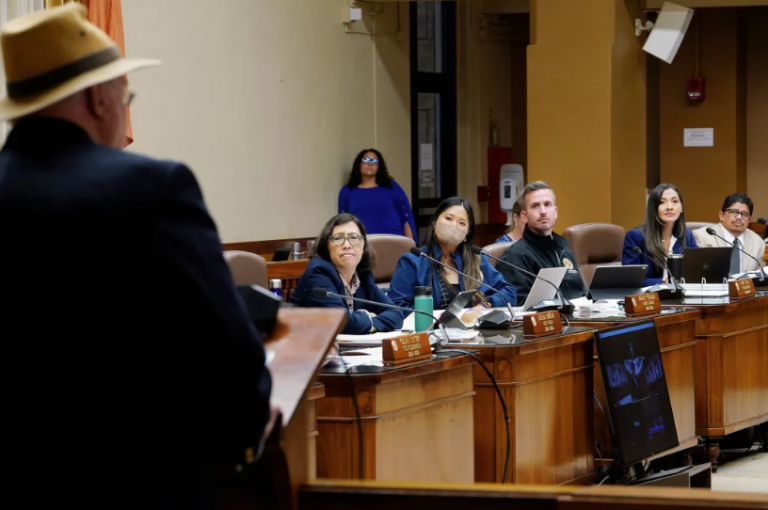
“Council oversight is not an obstruction,” Okimoto said in a floor speech minutes before passing the budget. “It is oversight, and the role Oʻahu residents expect this council to perform.”
Under Okimoto’s leadership, council members slashed two-thirds of the positions from the Office of Economic Revitalization, set up during the pandemic to support island businesses. Blangiardi called the slashes “illogical” during the council’s final budget vote, asking them to reverse the cuts. His plea was unsuccessful.
“The people you were elected to represent have never demonstrated their support for your decision to cripple an agency that provides critical services to their friends and neighbors,” he later said in a letter to the council as he vetoed the cuts. The council, which passed the budget with a veto-proof majority, plans to vote July 8 on whether to override it.
It’s through these kinds of conflicts that Okimoto is framing herself as a champion of independent and responsible governance as she runs reelection this year, vying for a second term representing the area between ʻAiea and Mililani. With no one stepping up to challenge her, Okimoto is running unopposed and will appear on the August primary election ballot.
. . .
Blangiardi’s bigger frustration with Okimoto’s handling of the budget remains her decision to slash positions from the Office of Economic Revitalization, which came despite oppositional testimony from Sherry Menor, president and CEO of the Hawaiʻi Chamber of Commerce, and Kiran Polk, executive and CEO of the Kapolei Chamber of Commerce.
“Reducing OER to a minimal staffing level would significantly diminish the City’s ability to administer recovery programs, support entrepreneurs, coordinate economic initiatives and pursue opportunities that strengthen Oʻahu’s economy,” Polk said in written testimony.
The pushback from Chamber of Commerce leadership was particularly striking since Okimoto pitched herself four years ago as a business-minded candidate.
Asked how she feels she’s done so far in that realm, Okimoto pivoted and emphasized her message of responsible spending.
“Economic development is one aspect,” she said. “I’ve always been a proponent of fiscal responsibility and government transparency and accountability.”
In Okimoto’s view, the Office Economic Revitalization had strayed from its initial mission and needed to be culled. A city audit published in January said the office had accomplished only three of its eight responsibilities. Okimoto kept some parts of the office, including its film industry position, and said she envisions a reworked agency whose job is in part to guide city legislation.
Read the full story here.